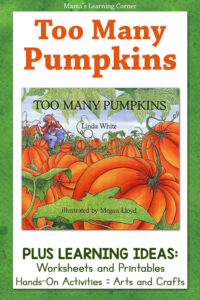
Year after year, my children and I read the children’s book Too Many Pumpkins by Linda White. Even though my older girls are middle and high school, we still read it! It has many memories attached to it, and it is a joy to relive them each fall.
Too Many Pumpkins is a story of giving and what that looks like for Rebecca Estelle. We all have our own gifts and abilities, and Rebecca chooses to share hers in a unique way.
This post contains affiliate links. Please see my disclosure policy for more details.
🎃 Browse through the many Pumpkin Learning Activities here at Mama’s Learning Corner. You’ll find phonics and math worksheets, coloring pages, and more!
Too Many Pumpkins At a Glance
- Book: Too Many Pumpkins
- Author: Linda White
- Illustrator: Megan Lloyd
- Suggested read-aloud ages: 4–8
- Book themes: Generosity, problem-solving, gardening, and the changing seasons
Find Too Many Pumpkins on Amazon → Too Many Pumpkins by Linda White
Already have a copy or borrowing from the library? You’re ready to enjoy the activities below!

About Too Many Pumpkins by Linda White
The main character of the story, Rebecca Estelle, despises pumpkins. As a girl, her family only had pumpkins to eat, so she was determined not to be around pumpkins as an adult!
A gigantic pumpkin falls off a truck into her yard and Rebecca Estelle refuses to deal with it, hoping that the pumpkin will just go away.
Spoiler Alert: The pumpkin does not!
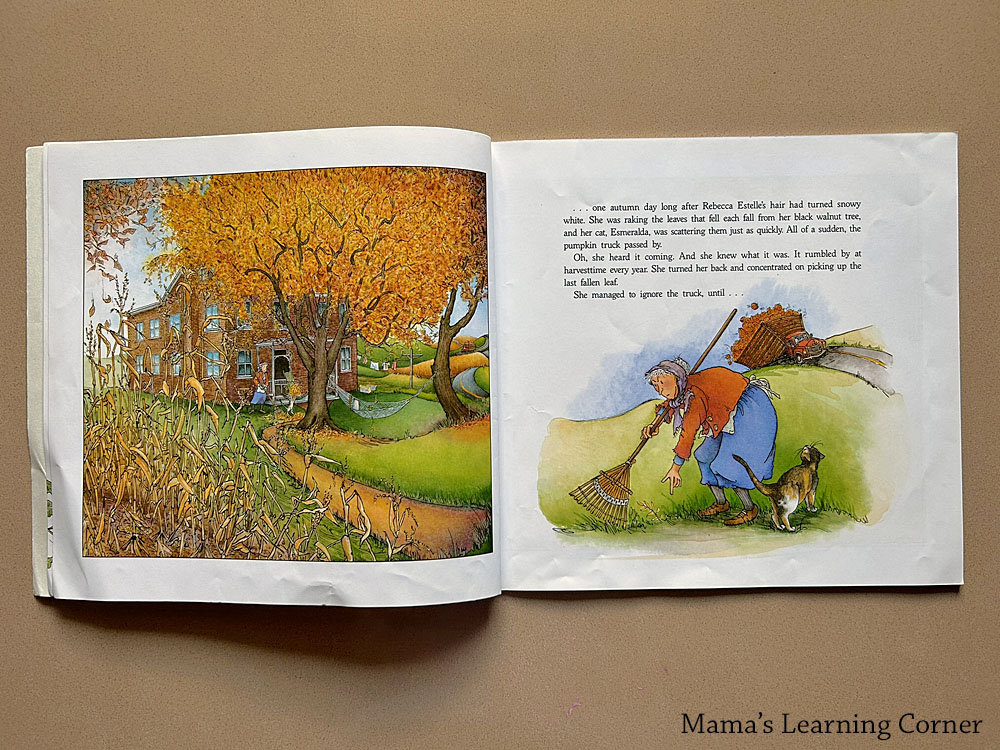
What happens next, however, is so heartwarming and reminds us that we can help others in unique ways.
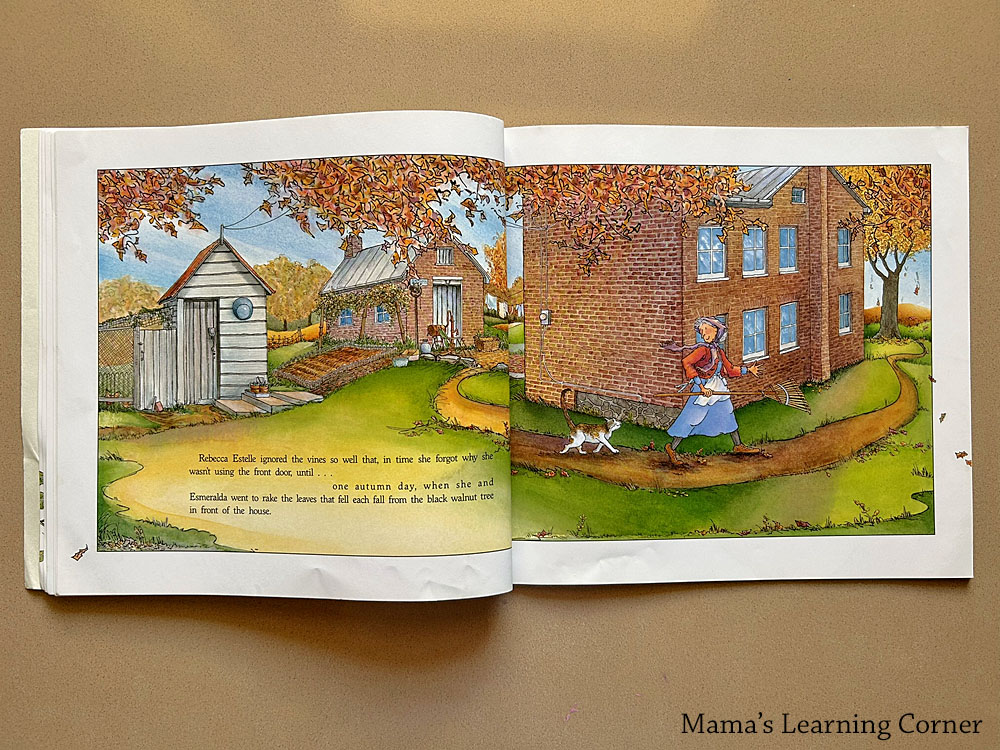
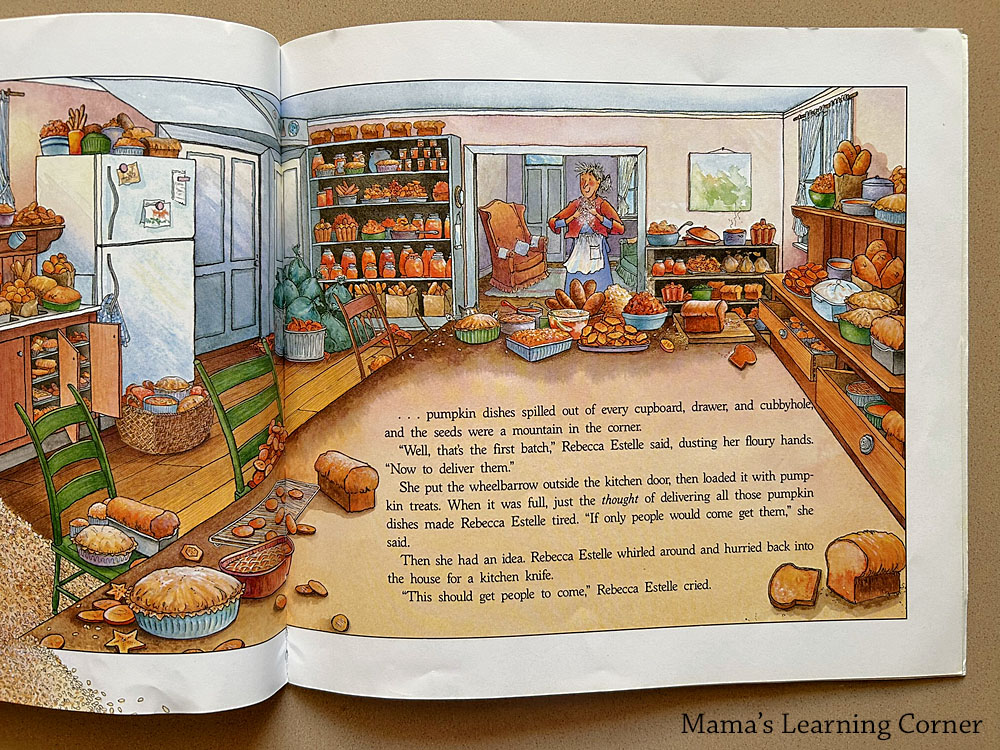
Do not miss taking a careful review of the illustrations in this book. They are bright, detailed, and just plain amusing!
Too Many Pumpkins Discussion Questions
One of my favorite parts of reading a book with my child – regardless of age – is talking about the book together. There is no greater joy than reading a book together for the first time, and then discussing all of the wonderful ins and outs! Discussing books is just one of the many methods I use to really know my children.
Choose a few questions to talk about after reading Too Many Pumpkins. Your children can answer aloud—there’s no need to write everything down!
- Why did Rebecca Estelle dislike pumpkins so much?
- How did the broken pumpkin lead to a much bigger problem?
- What did Rebecca Estelle do with all the pumpkins she grew?
- How did her choices bring her neighbors together?
- Would you have made the same choices as Rebecca Estelle? If not, what would you have done differently?
- What is something we could make or share to encourage someone this week?
For a younger child, start with a simple retelling: “Tell me what happened when the pumpkin fell into her yard.”
Too Many Pumpkins Book Activities and Learning Ideas
Choose from a few of these learning ideas and activities for Too Many Pumpkins to enjoy this lovely book even more! These types of activities are often what makes the book most memorable.
Make a List of Pumpkin Foods
Like Rebecca Estelle, name all of the pumpkin goodies that come to mind, such as pumpkin pie, pumpkin cookies, pumpkin muffins, or pumpkin bread. Choose a recipe for the one that sounds most appealing and bake it together this afternoon!
Hint: Making lists together is yet another great way to work on handwriting, phonics, and vocabulary for elementary children.
Bake Something to Share
Better yet, bake one of the goodies that you brainstormed and give it to someone in need or someone that needs a bit of encouragement this week.
Look for Changing Seasons
This book provides a great opportunity to review the seasons for younger learners. Jump to each page that features a different season in the book and talk about how the illustrator makes it look like fall or spring.
Explore the Word ‘Smithereens’
‘Smithereens’ is a fun word! Look up the definition and practice using it in sentences this week.
If you need a quick writing activity for the morning, teach your child how to formally copy a definition, including the part of speech. Brainstorm a few sentences together and have your child write them.
You could even brainstorm a paragraph using the word smithereens, while your child writes the completed paragraph on his paper.
Talk About How Pumpkins Grow
Ask your children how one broken pumpkin could lead to so many new plants. Talk about the seeds inside a pumpkin and what seeds need to grow.
If you have a pumpkin to open, look closely at the seeds and pulp. Your children can draw what they see or describe it aloud. Help your children understand what they see in the pumpkin and connect it to what happened in Rebecca Estelle’s yard.
Pumpkin Printables to Pair with the Book
If you’d like a little more pumpkin learning after your read-aloud, these two printable packets would pair well with the story:
- Pumpkin Coloring Pages with Handwriting Practice: Make a little pumpkin booklet while coloring fall pictures and tracing pumpkin vocabulary.
- Pumpkin Life Cycle Worksheets and Booklet: Take a closer look at how pumpkins grow, practice sequencing, and learn the parts of a pumpkin.
Both packets are available to purchase individually and are included in the All Access Pass. They are general pumpkin activities you can use alongside the book, or really any pumpkin book of your choosing.
More Fall Books and Learning Ideas
If your family enjoys reading about pumpkins as much as mine does, browse through our favorite pumpkin books for children. These are books we’ve enjoyed together over the years, and you might find another read-aloud to add to your fall basket!
You can also browse Children’s Books with Learning Ideas for more books paired with simple activities. Choose a story your children will enjoy, then try an idea or two that fits your day.


 Pumpkin Coloring Pages with Handwriting Practice

Leave a Reply